Week 8 / สัปดาห์ที่ 8

🏠 Natural Building & Local Materials
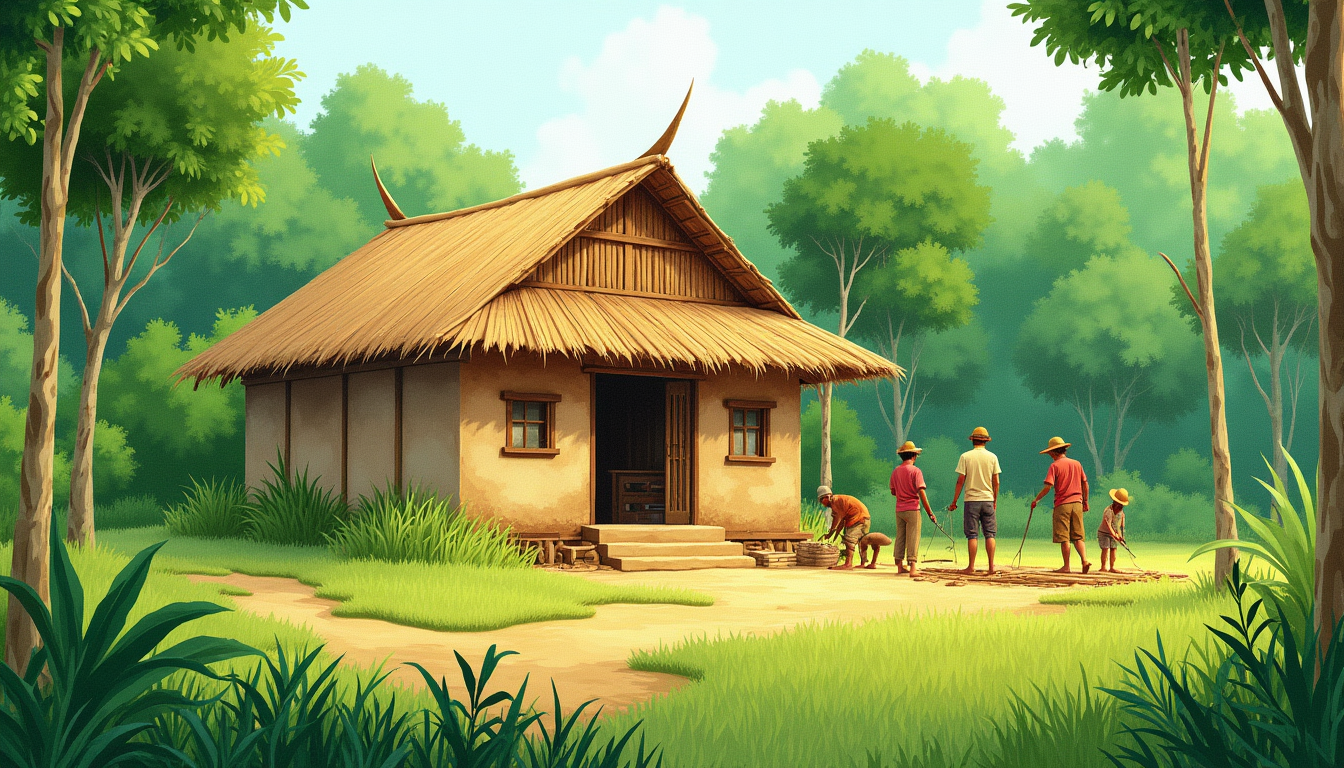
การก่อสร้างธรรมชาติและวัสดุท้องถิ่น
Natural Building & Local Materials

📖 Introduction / บทนำ

English

Natural building uses materials found in your local area — bamboo, earth, thatch, and reclaimed materials. In Thailand, people have been building with bamboo and palm leaves for centuries. Natural buildings are cooler in summer, cheaper to construct, and better for the environment than concrete. In this lesson, you'll learn about building techniques that work with Thailand's climate.

ภาษาไทย

การก่อสร้างธรรมชาติใช้วัสดุที่พบในพื้นที่ — ไม้ไผ่ ดิน หญ้าคา และวัสดุนำกลับมาใช้ ในประเทศไทย คนสร้างบ้านด้วยไม้ไผ่และใบปาล์มมานานหลายศตวรรษ อาคารธรรมชาติเย็นกว่าในฤดูร้อน สร้างถูกกว่า และดีต่อสิ่งแวดล้อมมากกว่าคอนกรีต ในบทเรียนนี้ คุณจะเรียนรู้เทคนิคการก่อสร้างที่เหมาะกับภูมิอากาศไทย

🎋 Bamboo is stronger than steel per unit weight and can grow up to 1 meter per day!
🎋 ไม้ไผ่แข็งแรงกว่าเหล็กต่อน้ำหนักหน่วยเดียวกัน และเติบโตได้สูงถึง 1 เมตรต่อวัน!
🏠 Traditional Thai houses are raised on stilts for flood protection and ventilation — a perfect permaculture design.
🏠 บ้านไทยแบบดั้งเดิมยกสูงบนเสาเพื่อป้องกันน้ำท่วมและระบายอากาศ — การออกแบบเพอร์มาคัลเจอร์ที่สมบูรณ์แบบ

📚 Vocabulary / คำศัพท์

Click the 🔊 button to hear the pronunciation. / กดปุ่ม 🔊 เพื่อฟังการออกเสียง

bamboo
ไม้ไผ่
A strong, fast-growing grass used for building
adobe
อิฐดิน
Bricks made from mud and straw dried in the sun
thatch
หญ้าคา / หลังคาจาก
Dried grass or palm leaves used for roofing
foundation
ฐานราก
The base that supports a building
ventilation
การระบายอากาศ
Allowing fresh air to flow through a building
insulation
ฉนวน
Material that keeps heat out or in
frame
โครง
The skeleton structure of a building
roof
หลังคา
The top covering of a building
earthen
ทำจากดิน
Made from soil or clay
plaster
ฉาบ / ปูนฉาบ
A mixture spread on walls to make them smooth
reclaim
นำกลับมาใช้
To reuse materials from old structures
durable
ทนทาน
Strong and long-lasting

📝 Grammar Focus: Materials and Quantities (a bundle of bamboo, two bags of clay)

วัสดุและจำนวน (a bundle of bamboo, two bags of clay)

English
Materials and quantities use special words: a bundle of bamboo, two bags of clay, a sheet of thatch, a bucket of water. These 'measure words' are similar to Thai classifiers (ลักษณนาม).
ภาษาไทย
วัสดุและจำนวน ใช้คำพิเศษ: a bundle of bamboo (ไม้ไผ่หนึ่งมัด), two bags of clay (ดินเหนียวสองถุง), a sheet of thatch (หญ้าคาหนึ่งแผ่น) คำเหล่านี้คล้ายกับลักษณนามในภาษาไทย

Examples / ตัวอย่าง

We need ten bundles of bamboo for the frame.
เราต้องการไม้ไผ่สิบมัดสำหรับโครง
Buy three bags of clay for the plaster.
ซื้อดินเหนียวสามถุงสำหรับฉาบ
Cut a sheet of thatch for the roof.
ตัดหญ้าคาหนึ่งแผ่นสำหรับหลังคา
We used two buckets of water to mix the adobe.
เราใช้น้ำสองถังเพื่อผสมอิฐดิน
She carried a pile of reclaimed wood.
เธอแบกกองหนึ่งไม้นำกลับมาใช้

✏️ Section Check / ตรวจสอบความเข้าใจ

1. Why are Thai houses raised on stilts?
ทำไมบ้านไทยถึงยกสูงบนเสา?

2. We need three ___ of clay.
เราต้องการดินเหนียวสาม ___

3. How long should bamboo soak in borax solution?
ไม้ไผ่ควรแช่ในสารละลายบอแรกซ์นานเท่าไร?

🎯 Tutorial Steps / ขั้นตอนการเรียนรู้

1
Understand Thai Building Climate Needs
เข้าใจความต้องการด้านภูมิอากาศ
English
Thailand's hot and humid climate requires: good ventilation (cross-breezes), raised floors (flood protection), wide roof overhangs (rain protection), and shade.
ภาษาไทย
ภูมิอากาศร้อนชื้นของไทยต้องการ: การระบายอากาศที่ดี (ลมพัดผ่าน) พื้นยกสูง (ป้องกันน้ำท่วม) ชายคาที่ยื่นกว้าง (ป้องกันฝน) และร่มเงา
2
Work with Bamboo
ทำงานกับไม้ไผ่
English
Bamboo must be treated before building. Harvest bamboo when it's 3–5 years old. Soak it in water or borax solution for 2 weeks to prevent insects.
ภาษาไทย
ไม้ไผ่ต้องรักษาสภาพก่อนก่อสร้าง ตัดไม้ไผ่อายุ 3–5 ปี แช่ในน้ำหรือสารละลายบอแรกซ์ 2 สัปดาห์เพื่อป้องกันแมลง
3
Try Earth Plastering
ลองฉาบดิน
English
Mix clay soil, sand, straw, and water to make natural plaster. Apply it to walls for insulation. In Thailand, add rice husks for lighter plaster.
ภาษาไทย
ผสมดินเหนียว ทราย ฟาง และน้ำ เพื่อทำปูนฉาบธรรมชาติ ฉาบบนผนังเพื่อเป็นฉนวน ในไทย เพิ่มแกลบเพื่อปูนฉาบที่เบาขึ้น
4
Design for Cross-Ventilation
ออกแบบให้ลมพัดผ่าน
English
Place openings on opposite walls so air flows through. Thai houses traditionally have open gable ends. This natural cooling can replace air conditioning.
ภาษาไทย
วางช่องเปิดบนผนังตรงข้ามเพื่อให้อากาศไหลผ่าน บ้านไทยแบบดั้งเดิมมีปลายจั่วเปิด การระบายอากาศธรรมชาตินี้ทดแทนเครื่องปรับอากาศได้
5
Use Reclaimed Materials
ใช้วัสดุนำกลับมาใช้
English
Old wood, windows, and metal roofing can be reused. In Thailand, many builders reclaim teak from old houses. This saves money and reduces waste.
ภาษาไทย
ไม้เก่า หน้าต่าง และหลังคาโลหะสามารถนำกลับมาใช้ได้ ในไทย ช่างหลายคนนำไม้สักจากบ้านเก่ามาใช้ ช่วยประหยัดเงินและลดขยะ

🛠️ Hands-On Activity / กิจกรรมลงมือทำ

English

Write a materials list for building a simple bamboo garden shelter. Use quantity expressions: 'We need ten bundles of bamboo, five sheets of thatch...' Then draw a simple design of the shelter with labels.

ภาษาไทย

เขียนรายการวัสดุสำหรับสร้างซุ้มไม้ไผ่ในสวนอย่างง่าย ใช้สำนวนบอกจำนวน จากนั้นวาดแบบง่ายๆ ของซุ้มพร้อมป้ายชื่อ

📋 Reference Table / ตารางอ้างอิง

Topic / หัวข้อDetails / รายละเอียด
Bamboo / ไม้ไผ่Frame, walls, floors, furniture — treat first!
Earth/Clay / ดินเหนียวPlaster, adobe bricks, floors
Thatch / หญ้าคาRoofing — lasts 3–5 years, excellent insulation
Rice Husks / แกลบLightweight plaster additive, insulation
Reclaimed Wood / ไม้เก่าStructure, furniture — often teak in Thailand
Palm Leaves / ใบปาล์มRoofing, walls — traditional Thai material

✅ Summary / สรุป

📝 Homework / การบ้าน

1. Write a materials list for a small bamboo shed using 8 quantity expressions.
เขียนรายการวัสดุสำหรับเพิงไม้ไผ่เล็กๆ โดยใช้สำนวนบอกจำนวน 8 อัน
2. Research traditional Thai house design. Write 5 features in English.
ค้นคว้าการออกแบบบ้านไทยแบบดั้งเดิม เขียน 5 คุณสมบัติเป็นภาษาอังกฤษ
3. Find 3 examples of natural buildings in your area. Describe the materials used.
หาตัวอย่าง 3 อาคารธรรมชาติในพื้นที่ของคุณ บรรยายวัสดุที่ใช้